Strong First, Soar Higher Later: Why We’re Focusing on Strength, Conditioning, and Endurance in Our Kids Aerial Classes
Strong First, Soar Higher Later:
Why We’re Focusing on Strength, Conditioning, and Endurance in Our Kids Aerial Classes
If you’ve been around The Yoga Dance Co this year, you may have noticed something a little different.
We didn’t dive straight into choreography for a big spring recital.
We didn’t start polishing a performance routine in January.
We didn’t rush toward stage-ready sequences.
Instead, we slowed down.
We strengthened.
We conditioned.
We practiced.
We refined technique.
We built endurance.
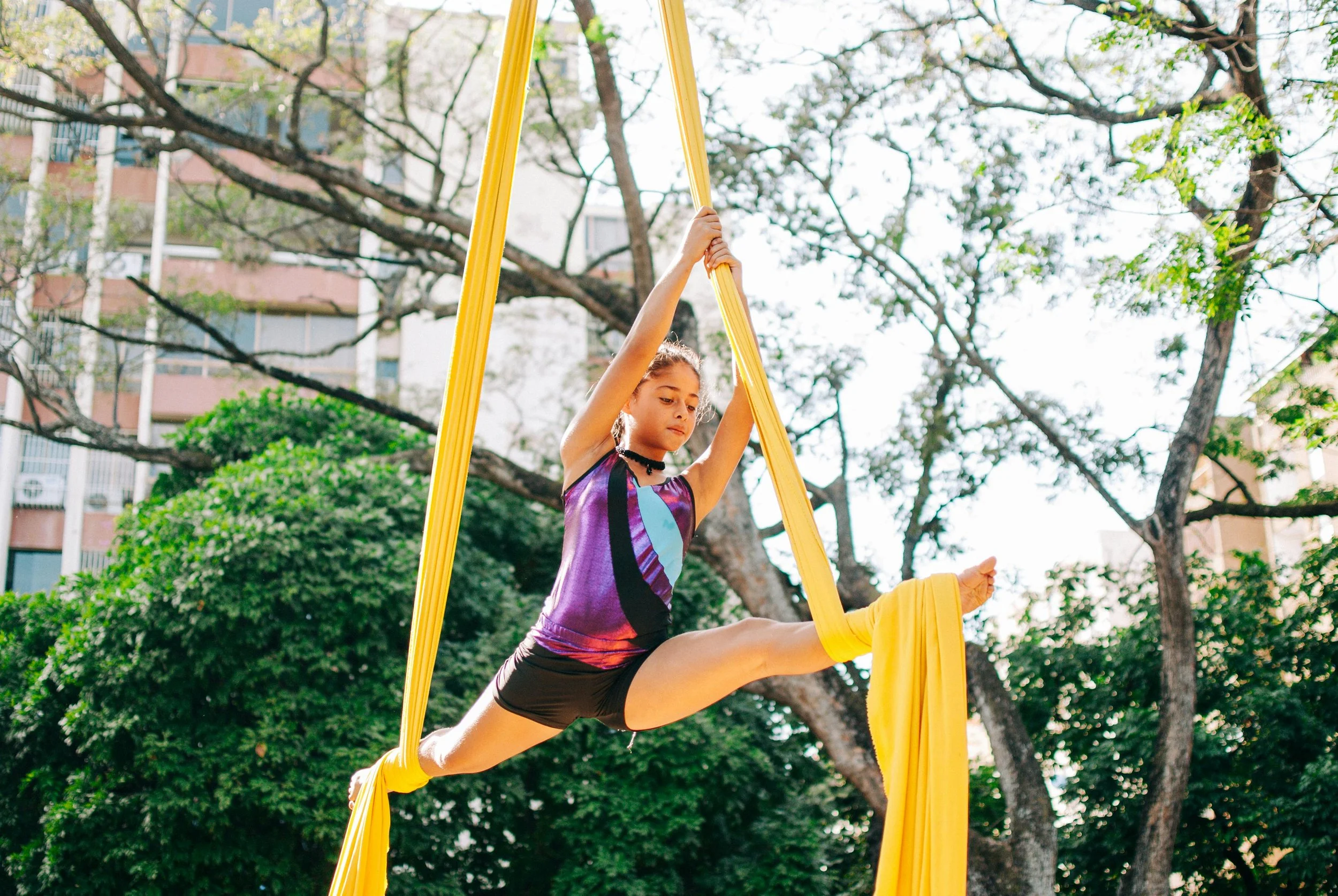
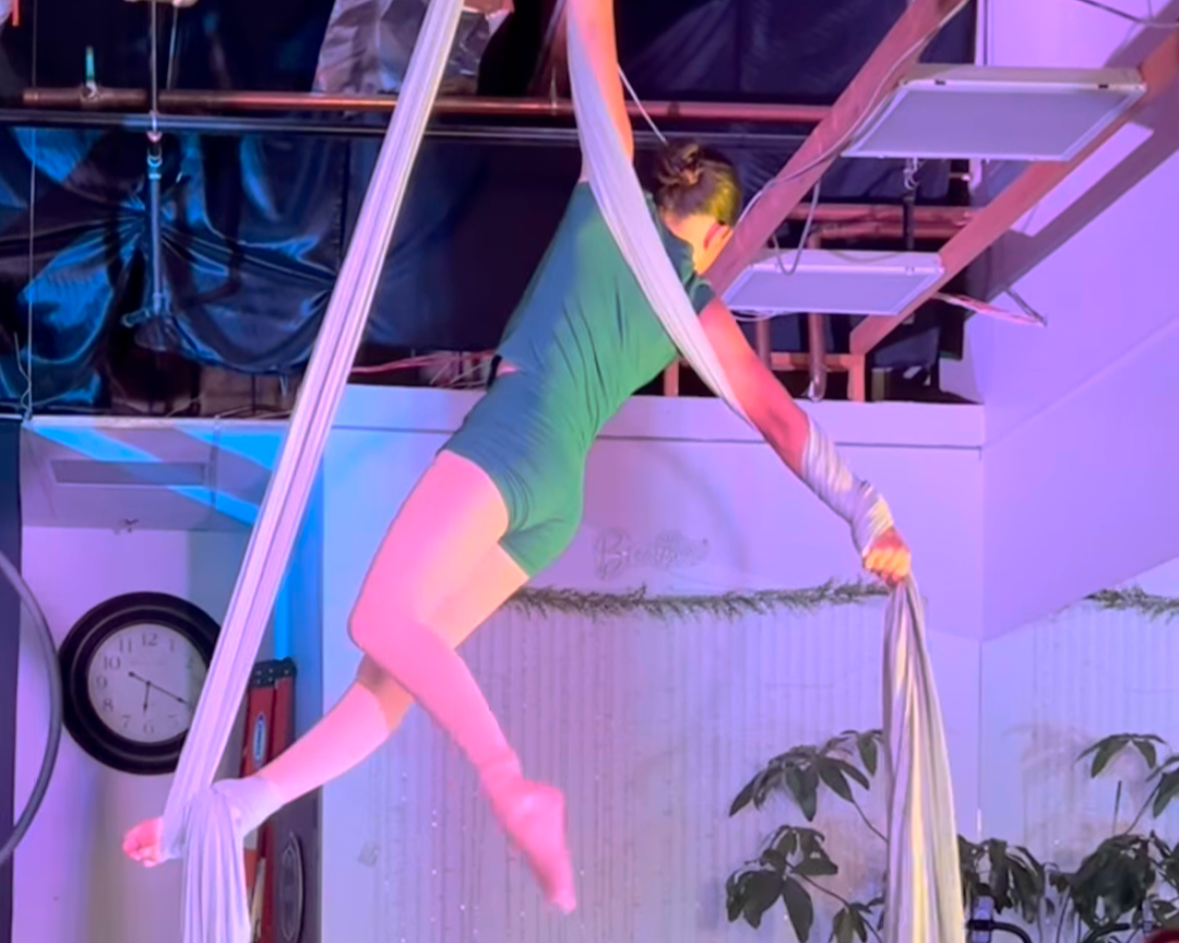
And yes — we still climbed the silks, explored the hammock, and spun on the apparatus. But the focus shifted. This season is about foundations.
Because here’s what we know:
Strong aerialists are confident aerialists.
Conditioned bodies create safe bodies.
And endurance builds freedom.
Let’s talk about why this matters — and why this season of strengthening may be the most important one yet.
⸻
Why Not Jump Straight Into a Routine?
Performances are magical. There’s nothing quite like seeing your child light up under the stage lights — proud, brave, and beaming after mastering something hard.
But here’s the truth about aerial arts:
A beautiful routine is built on invisible strength.
Every effortless climb.
Every clean inversion.
Every pointed toe mid-air.
Every controlled descent.
Those moments don’t happen by accident. They happen over time, because of repetition, conditioning, and patient skill-building.
When we skip foundations, we risk:
• Frustration
• Plateaus
• Sloppy technique
• Preventable injuries
• Burnout
When we prioritize foundations, we build:
• Resilience
• Body awareness
• Proper muscle engagement
• Injury prevention
• Long-term progress
In other words, we’re not delaying performance season — we’re preparing for an even stronger one.
What Conditioning Really Does for Kids
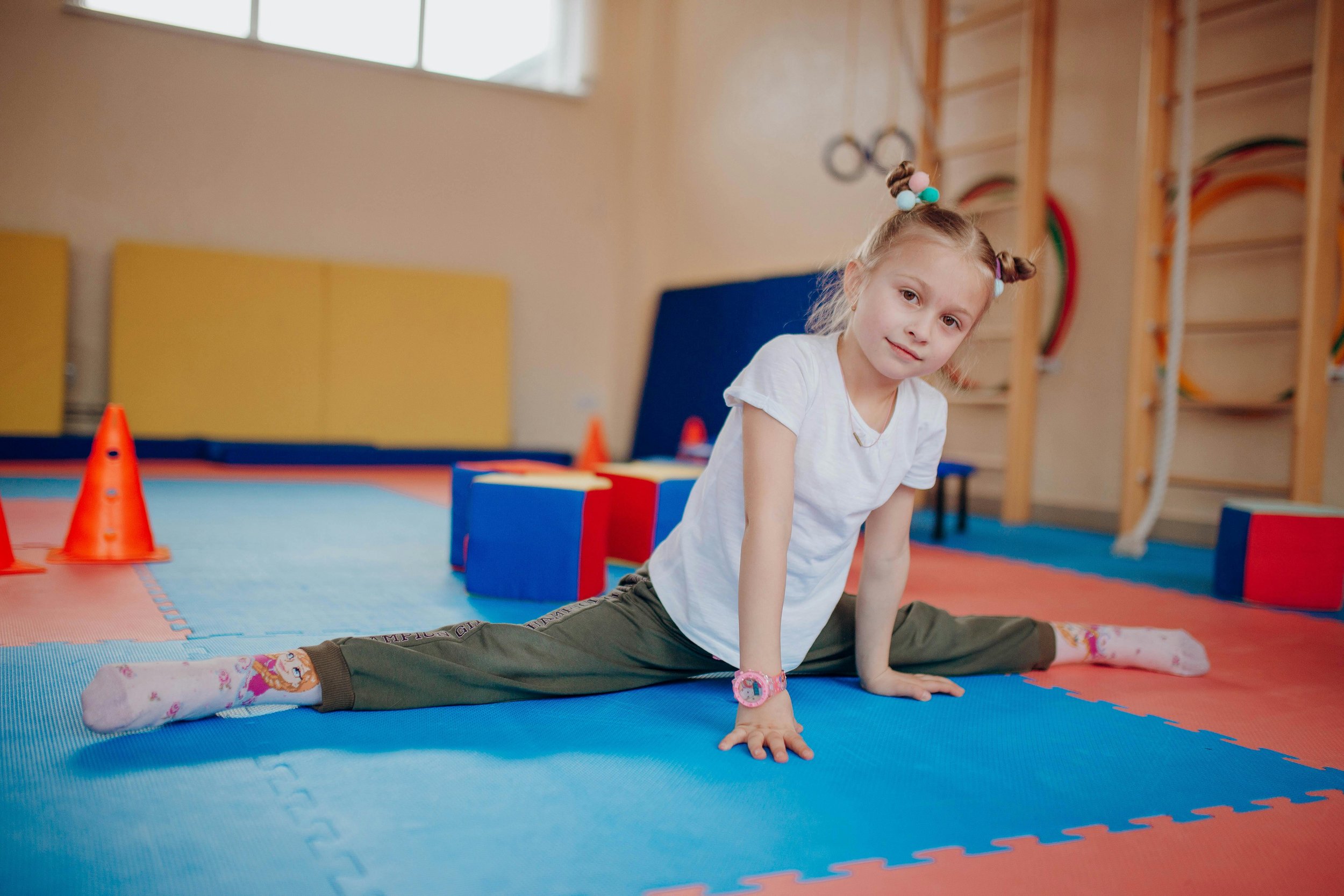
Conditioning sometimes sounds boring. Push-ups. Jumping jacks. Climbs. Wall sits. Grip drills. Core work.
But here’s what it’s actually building behind the scenes:
1. Real Strength (Not Just Skill Memorization)
Kids can sometimes “muscle through” tricks using momentum or compensating muscles. But that doesn’t create sustainable progress.
When we slow down and train:
• Clean inversions
• Controlled descents
• Proper shoulder engagement
• Core stability
They develop true functional strength.
That strength transfers everywhere — not just in silks, but in dance, sports, playground play, and everyday posture.
⸻
2. Body Awareness & Control
Aerial arts are unique. Kids are upside down, spinning, climbing, suspending their weight in the air.
Without conditioning, their bodies don’t always know how to stabilize.
With conditioning, they learn:
• Where their hips are in space
• How to activate their back muscles
• How to engage their shoulders safely
• How to point toes intentionally
• How to move with control instead of momentum
This body awareness builds confidence. They stop guessing — and start owning their movement.
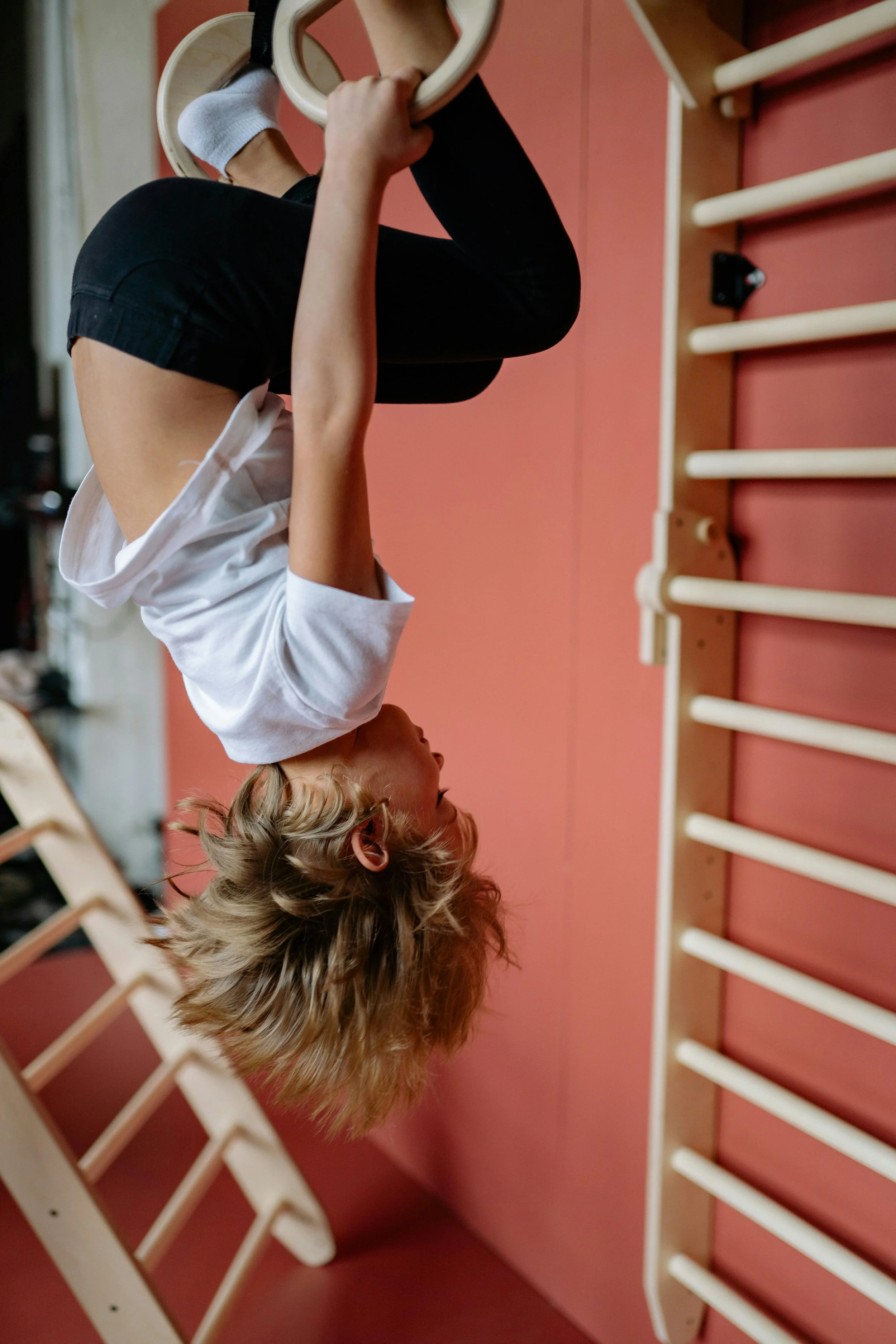
3. Endurance = Freedom
Endurance is the secret ingredient most people overlook.
A child might be able to climb once.
But can they climb three times with control?
Can they hold a pose long enough to breathe into it?
Can they transition smoothly without rushing?
When endurance increases, something beautiful happens:
They stop thinking about being tired — and start thinking about expression.
They can:
• Smile mid-sequence.
• Extend lines.
• Add musicality.
• Dance instead of just survive the trick.
And that’s where art begins.
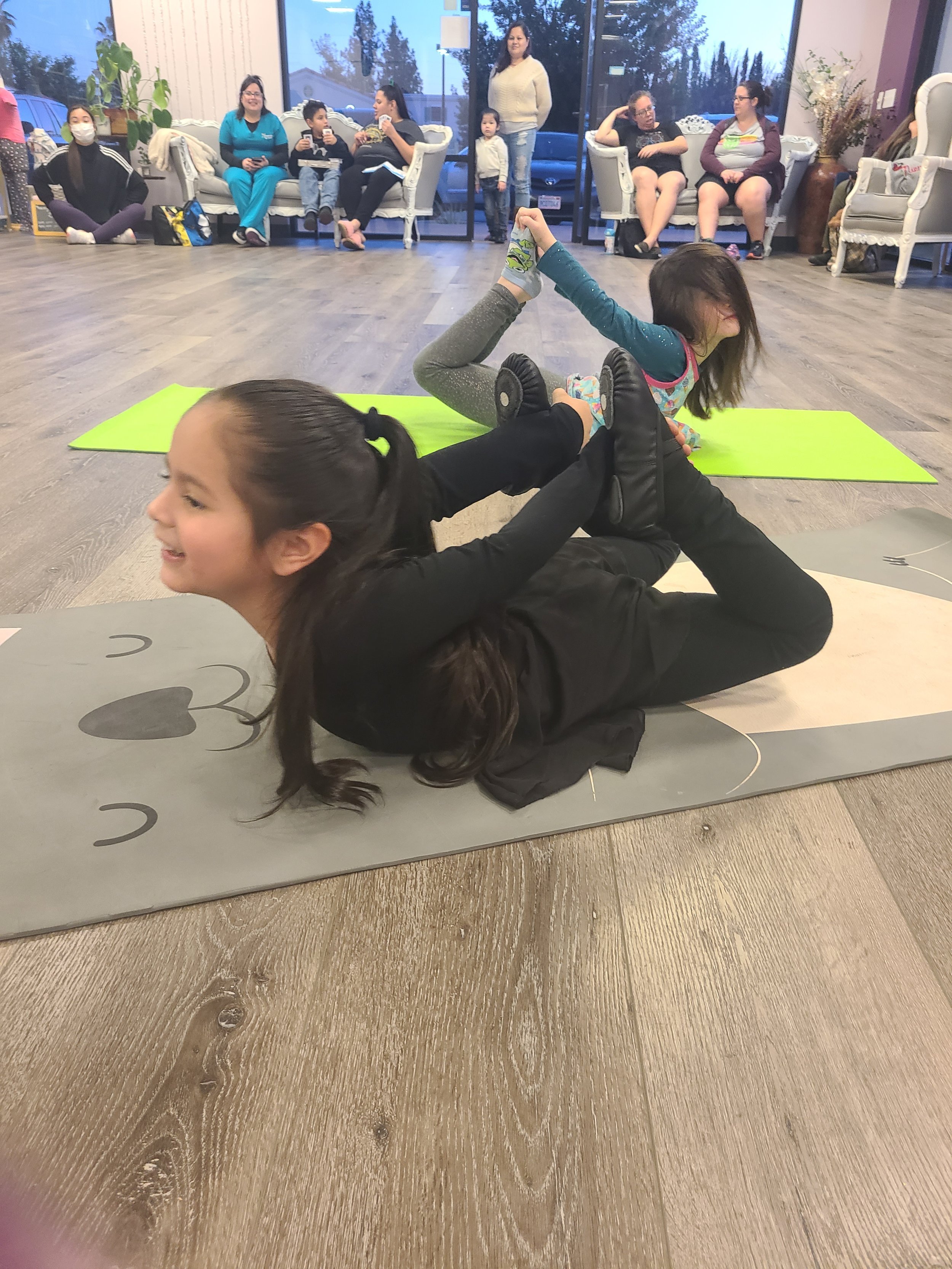
The Dance Element: Why Technique Matters
This year, we’ve also been intentionally incorporating more dance fundamentals into class.
Why?
Because aerial isn’t just strength — it’s storytelling in the air.
When we work on:
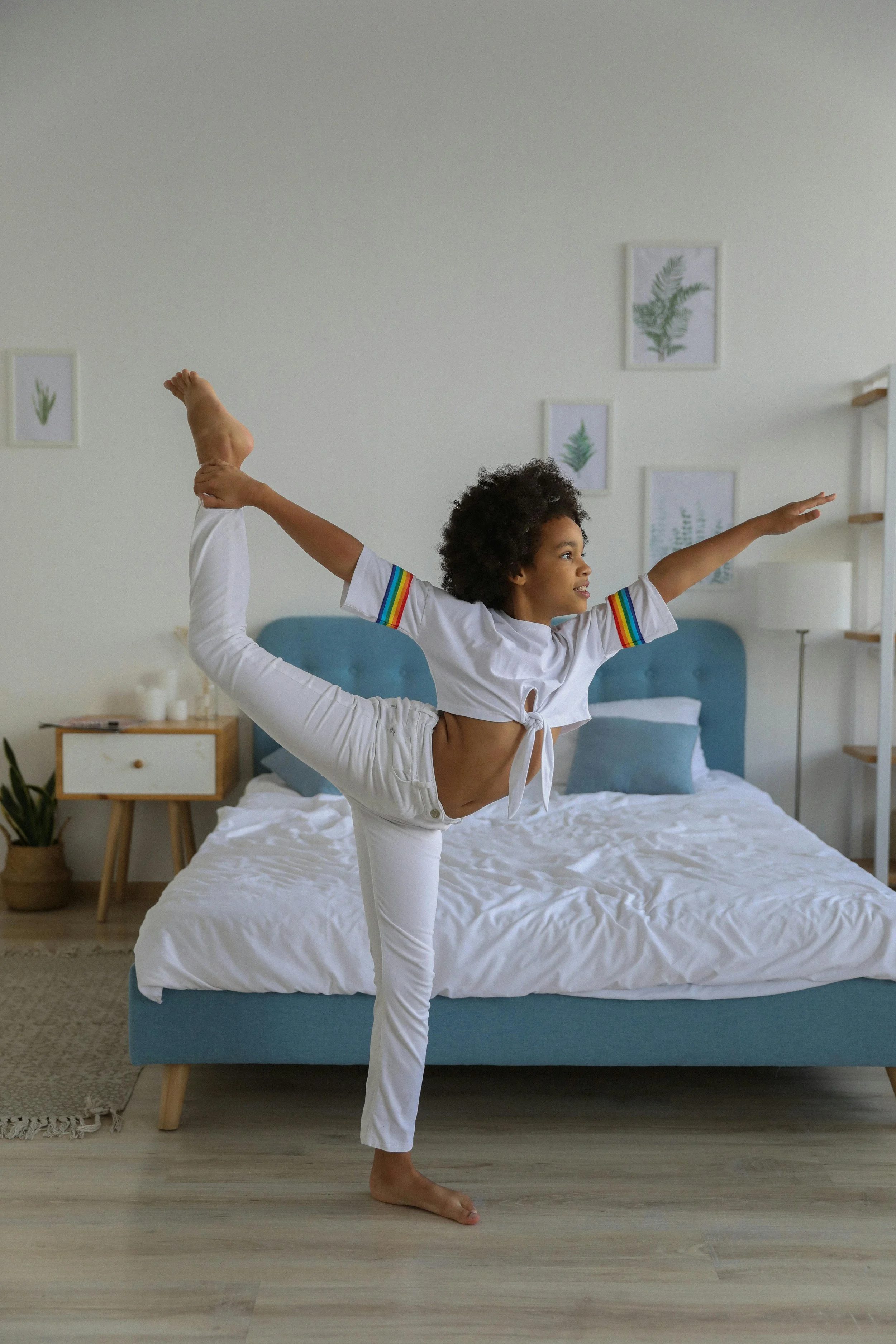
• Turnout
• Alignment
• Clean lines
• Arm pathways
• Musicality
• Floor transitions
We’re giving students tools to become expressive movers, not just strong climbers.
Dance technique refines aerial skills.
It adds polish.
It builds grace.
It teaches discipline.
And most importantly — it helps kids connect to their bodies as artists, not just athletes.
⸻
The Long Game: Confidence That Lasts
There’s something powerful about watching a child master a skill they once found impossible.
The first time they invert without jumping.
The first time they climb without stopping halfway.
The first time they hold themselves steady and controlled.
Those moments don’t come from rushing. They come from repetition.
From failing and trying again.
From strengthening muscles that felt shaky.
From learning patience.
When we prioritize foundations, we’re teaching more than aerial technique.
We’re teaching:
• Delayed gratification
• Consistency
• Discipline
• Perseverance
• Trust in the process
And those lessons carry far beyond the studio walls.
But Don’t Worry — They Still Get to Play
Now let’s clear something up. We are not removing joy from class.
The silks are still up.
The hammocks are still swinging.
The laughter is still loud.
Students are still:
• Climbing
• Spinning
• Creating mini sequences
• Exploring skills
• Expressing themselves in the air
The difference?
There’s intention behind the play.
Instead of rushing through tricks, they’re earning them.
Instead of performing before they’re ready, they’re building toward something stronger.
And that leads us to one of our favorite parts of this season…
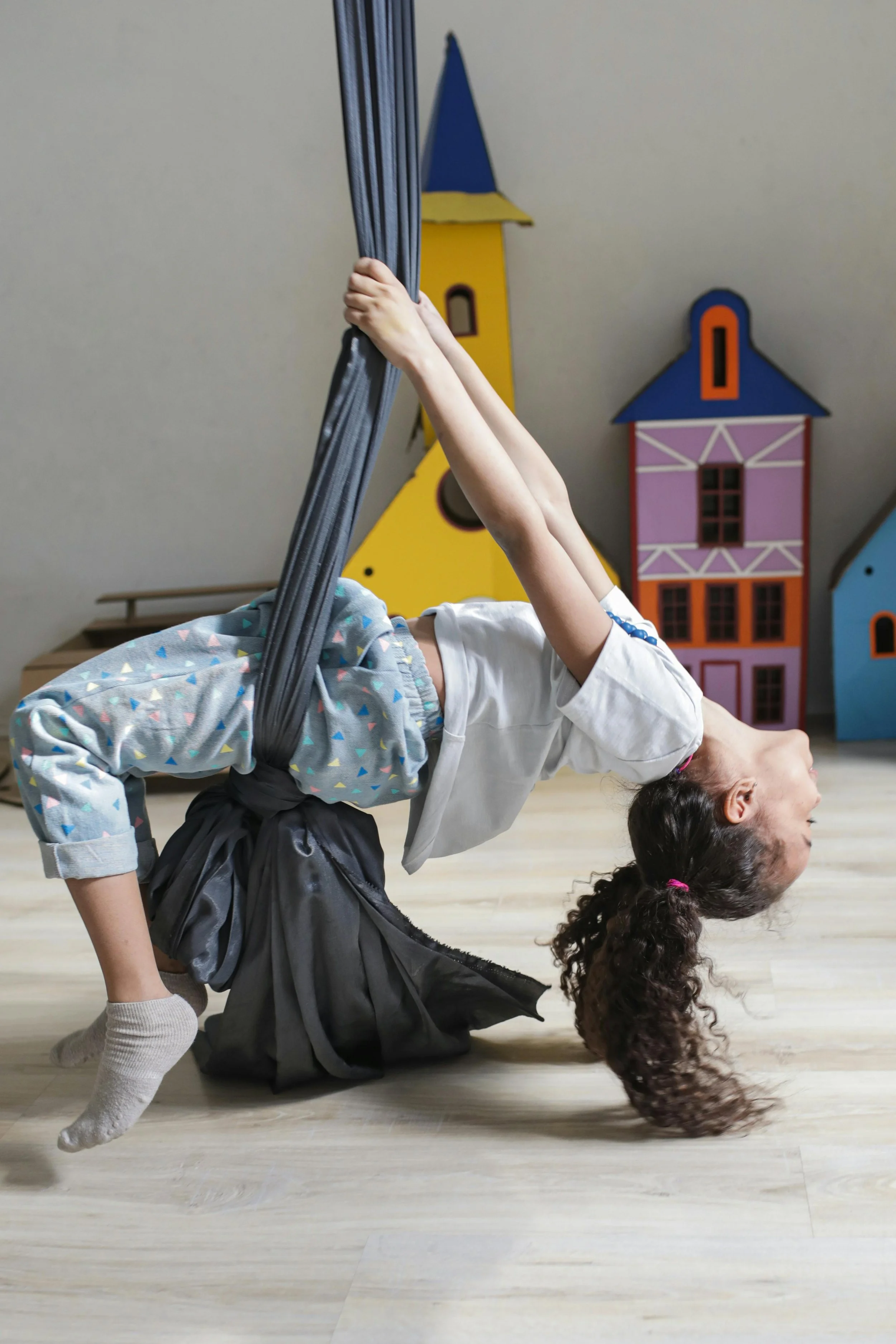
The Reward of Earning the Air
There is something incredibly empowering about working toward a goal — and then achieving it.
We’ve been setting conditioning benchmarks in class. Things like:
• Holding a hollow body position for a set amount of time
• Completing a certain number of clean climbs
• Demonstrating controlled inversions
• Showing proper shoulder engagement
• Building endurance across multiple sequences
When students reach these goals, they unlock more freedom.
More spin time.
More creative play.
More advanced sequences.
More expressive choreography.
And when they finally get to fully dance in the silks — after putting in the work — it feels different.
It feels earned.
They don’t just “do the trick.” They command it.
They don’t just survive the climb.
They float.
They don’t just hang upside down.
They hold it with strength and a smile.
That reward is so much sweeter because of the process.

⸻
Safety Is Love
There’s another reason we’re leaning into conditioning this season: safety.
Growing bodies are still developing. Joints are still forming. Coordination is still evolving.
Proper conditioning:
• Protects shoulders
• Strengthens grip
• Supports spinal alignment
• Prevents overuse injuries
• Builds balanced muscle engagement
In aerial arts especially, strong shoulders and engaged cores are non-negotiable.
We never want to rush a child into a trick their body isn’t ready for.
Taking time now means fewer setbacks later.
And that’s an act of care.
⸻
Trust the Process (Even When It’s Not Flashy)
We understand — performances are exciting. Costumes are fun. Applause feels amazing.
But growth seasons aren’t always flashy.
Sometimes they look like:
• Repeating climbs.
• Practicing straight legs again.
• Holding a plank 10 seconds longer.
• Resetting alignment over and over.
And yet, these “boring” reps are where magic is quietly happening.
Strength is building.
Confidence is forming.
Habits are solidifying.
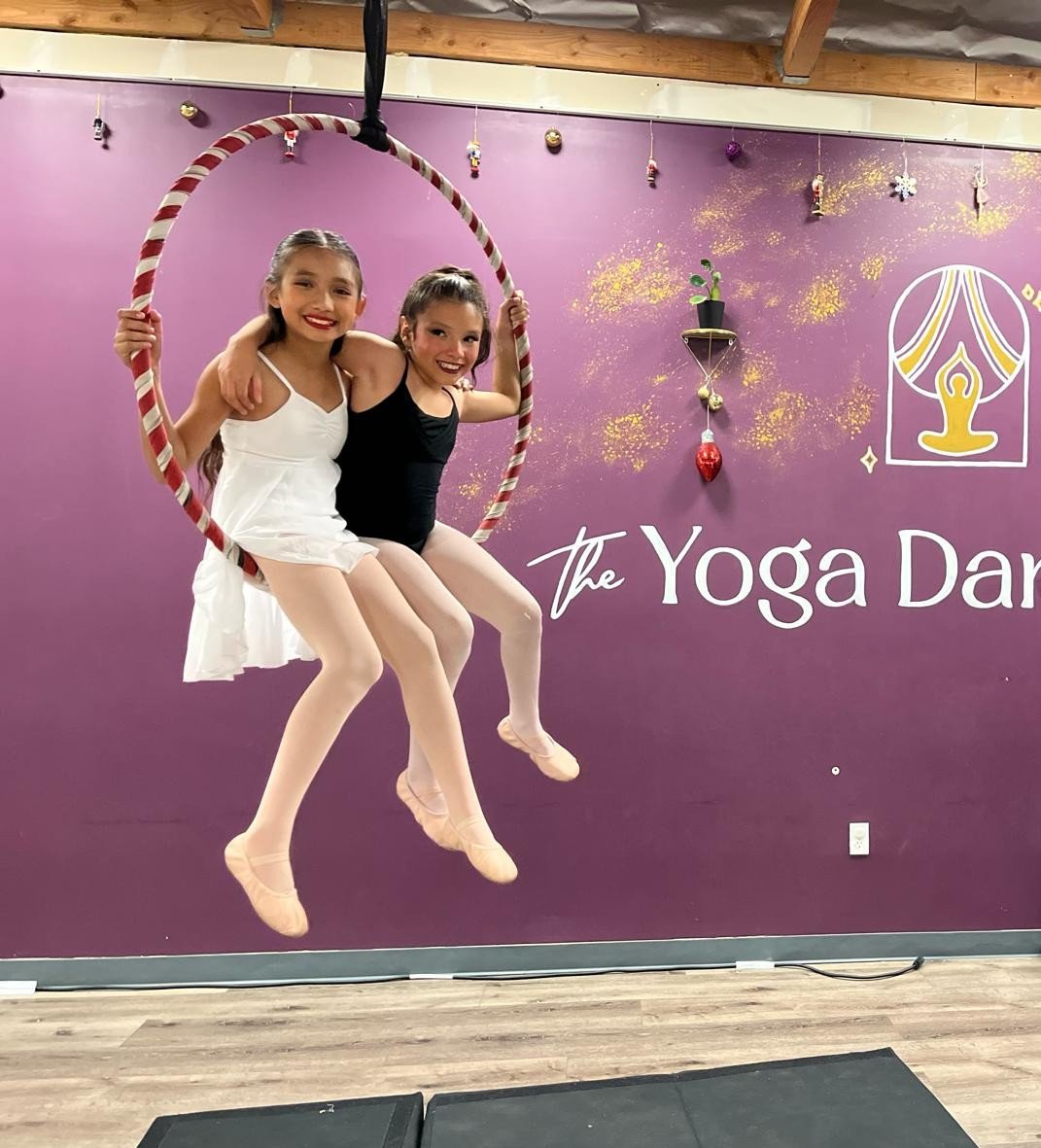
When we return to full performance choreography, you’ll see the difference.
Lines will be cleaner.
Transitions smoother.
Smiles more relaxed.
Movements more controlled.
Because the foundation will be solid.
⸻
What This Means for Your Child
If your child has seemed a little more focused lately…
If they’ve mentioned conditioning drills and hard work.
That’s a good sign.
It means they’re learning to respect their bodies.
It means they’re building real strength.
It means they’re growing — inside and out.
And when it’s time to fully choreograph and showcase their skills?
They won’t just be ready.
They’ll soar.
⸻
Our Philosophy at The Yoga Dance Co
At The Yoga Dance Co, we believe in building artists who are strong, safe, and self-aware.
We believe in:
• Progress over perfection
• Foundations before flash
• Strength before spectacle
• Technique before tricks
Because when children learn to move with control and confidence, they don’t just become better aerialists.
They become more resilient humans.
And that’s always the bigger goal.
⸻
The Best Is Still Ahead
This season may feel different — but it’s purposeful.
We’re not stepping back from performance.
We’re stepping deeper into preparation.
So when your child finally gets to fully dance in the silks — when they flow from climb to inversion to spin with ease — it won’t just be beautiful.
It will be powerful.
Because it was built slowly.
Intentionally.
Strongly.
And strong aerialists?
They don’t just hang in the air.
They soar. 💛